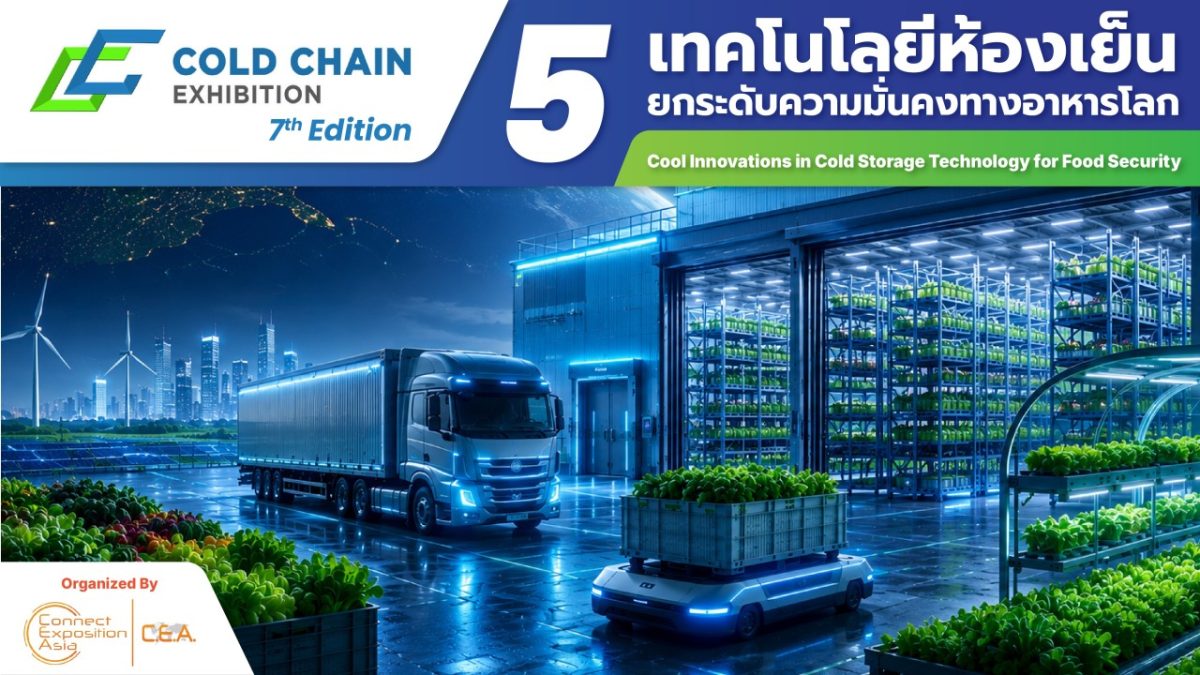
5 Cold Storage Technologies Enhancing Global Food Security
The fresh food we eat every day comes from “a system that controls quality from the source,” especially the cold storage that doesn’t just keep things cool, but a system which slows down spoilage, maintains quality, and ensures that temperature-controlled goods like food, medicine, and other products reach customers safely and on time.
In a day that the world demands greater food security, cold storage is no longer just a warehouse; it’s “the heart of the food supply chain”, ensuring that goods don’t spoil, run out, or fall below standard. That’s why cold storage technology is developing rapidly.
Here are 5 cold storage innovations that are changing the game of food preservation, making it more efficient, reducing losses, and meeting the needs of modern businesses:
- Solar Power as an Energy Source: An Alternative for Long-Term Sustainability.
Modern cold storage is no longer powered only by conventional electricity. Instead, many facilities now use solar energy to run their systems, helping businesses cut electricity costs and manage long-term operating expenses more effectively.
Rooftop solar panels are more than a symbol of environmental responsibility. They turn clean energy into practical business value by reducing reliance on external power sources and lowering carbon emissions. For cold storage facilities, this means lower operating costs, more stable energy use, and stronger long-term sustainability—while helping businesses grow in a market increasingly shaped by energy prices and ESG expectations.
- Eco-Friendly and Energy-Efficient Refrigeration Technology.
A major advance in refrigeration is changing how businesses control both costs and product quality. Instead of relying on traditional, energy-intensive systems, many are adopting natural refrigerants such as ammonia (NH₃) and CO₂, which deliver more efficient, precise, and environmentally responsible cooling.
Ammonia refrigeration systems offer high efficiency for industrial applications, while CO₂ systems perform especially well at very low temperatures, including blast freezing. Paired with smart energy management, these technologies help cold rooms maintain stable temperatures, reduce unnecessary energy use, and lower long-term operating costs—allowing businesses to improve efficiency, profitability, and sustainability at the same time.
- High-Tech Insulation Materials.
Insulation may not be the most visible part of a cold room, but it has a major impact on performance and cost. Advanced materials such as Polyisocyanurate (PIR) and Vacuum Insulated Panels (VIP) improve temperature stability, reduce the load on refrigeration systems, and lower energy use over time. The result is more consistent product quality, greater system reliability, and lower operating costs, making high-performance insulation a smart long-term investment for cold storage businesses.
- Automation and the Internet of Things (IoT): Automation and IoT technology for Real-Time Temperature, Humidity, and Air Quality Monitoring.
Automation and IoT are transforming cold storage facilities into “smarter and more accurate” environments. Robots and automated conveyor systems can move, arrange, and pick goods with precision, reducing repeated door openings that cause temperature fluctuations. In addition, IoT sensors are installed to monitor temperature, humidity, and environmental conditions in real-time. This data allows managers to detect anomalies early and take immediate action, enabling businesses to better control product quality, reduce risks, lower costs, and ensure the entire system operates “stable, accurate, and ready for long-term growth.”
- Wireless Data Loggers and Predictive Analytics: Systems that Measure Continuously, Identify Problems before They Occur, and Prevent Losses in a Timely Manner.
Small and affordable wireless data logging devices have become the standard in warehouses today. These devices not only record temperature and humidity but can also connect to the cloud. When combined with predictive analytics, the system can predict potential problems in advance, such as potential equipment failures or abnormal temperature readings.
As a result, businesses can prevent damage before it occurs, reduce product losses, and maintain consistent quality. This shifts operations from reactive problem-solving to proactive control.
Cold storage is at “the heart of Food Security” and the long-term success of food businesses. It extends shelf-life, reduces waste, and helps maintain a stable supply during both shortages and surpluses. By keeping products at precise temperatures, cold storage also protects food quality and safety, prevents contamination, and reduces risks to consumers.